

Messenger earning and online task offers often compress several different questions into one persuasive message: a link loads, a balance appears, a promoter shows a GCash screenshot, and the offer is described as free registration. Those details can be real while the operator, work, terms, and payout remain unverified.
A risk-based review separates each claim and tests the least sensitive evidence first. The objective is not to label every unfamiliar offer safe or fraudulent. It is to avoid sending money, identity documents, one-time codes, or wallet credentials before the responsible operator and written rules are clear.
Break the Offer Into Claims You Can Test
Start by writing down exactly what the message claims. Does it promise registration, available tasks, a rate, a withdrawal method, a payment timeline, or guaranteed earnings? Each claim needs different evidence.
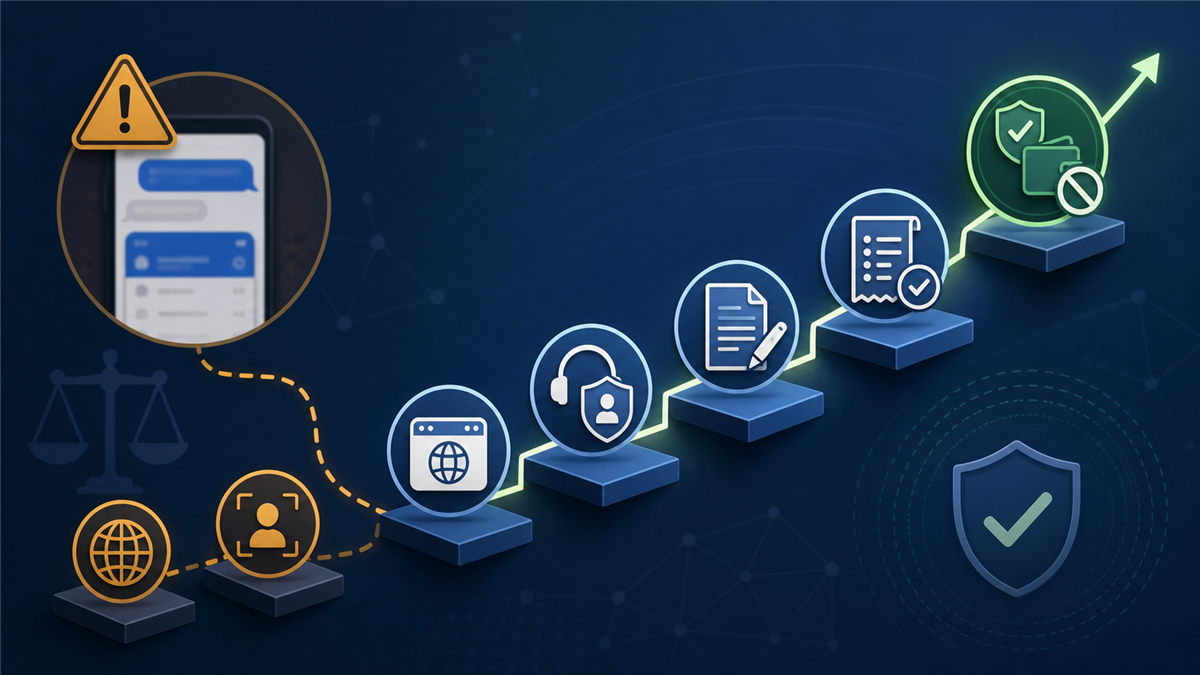
- Access claim: the exact page or domain resolves.
- Operator claim: a responsible business or person can be identified.
- Task claim: current work and eligibility rules are published.
- Payment claim: withdrawal terms and fees are stated before participation.
- Performance claim: a complete, attributable transaction record supports what the promoter says.
Do not let one successful check stand in for all five. A working social page does not prove that tasks are available. A wallet image does not identify the operator. An active chat does not establish stable withdrawal rules.
Use an Evidence Ladder, Not a Numeric Rating
A single score hides the distinction between page availability, operator identity, published terms, and transaction evidence. Use a ladder instead and stop at the first missing rung.
For example, the Chrome Encoding verification guide records that a public social trace resolved on its review date while the operator, current tasks, published rates, and payout performance remained unverified. That narrower conclusion is safer and more useful than a star score or a promise that a platform is paying.
RiskBites also maintains a broader checklist for spotting risky Messenger offers before connecting an account or Page. The same principle applies here: verify identity and permissions before granting access.
Check the Registration Link Without Registering First
Save the complete URL, page name, account handle, date, and original message. Inspect the domain for misspellings, shorteners, unrelated file hosts, or a sudden redirect to a different identity. Search for the operator’s name independently instead of using only the promoter’s link.
A legitimate registration path should explain who operates it, why information is requested, which permissions are needed, and how support works. If the form requests identity or financial data before it names the responsible party, leave the form and investigate first.
Do not download an application package, browser extension, or remote-access tool sent through a private message. A platform should not require you to bypass normal app-store or browser warnings merely to view its terms.
Compare Written Terms With the Promoter’s Message
Capture the task rules, fees, withdrawal threshold, payout method, privacy terms, and account-closure conditions before you begin. If the promoter’s explanation differs from the published page, ask for the discrepancy to be resolved in writing.
Changing rules are a strong risk signal. Stop if an offer introduces a new recharge, activation fee, referral quota, tax, insurance payment, or verification transfer after you have completed tasks. The United States Federal Trade Commission warns that task scams can display supposed earnings and later demand a deposit to continue or withdraw.
The practical boundary is simple: never pay someone for the promise that they will pay you. A new label does not make an up-front transfer safer.
Treat GCash Screenshots as Leads to Investigate
A screenshot may omit the source of funds, sender and recipient relationship, date context, reversal status, or whether it belongs to the person promoting the offer. It may be cropped, reused, or edited. It is evidence that an image exists, not that the operator paid for the advertised task.
Stronger evidence connects the operator, the written rules, the activity that qualified for payment, and a complete dated transaction record. Even that does not guarantee that another person will receive the same offer or withdrawal terms.
When reviewing a screenshot, list what is missing rather than focusing on the displayed amount. If the promoter refuses to explain the operator or terms and relies only on images, the evidence ladder has not cleared.
Protect Your GCash Account and One-Time Codes
GCash states that it will not ask for an MPIN or OTP and advises users to rely on official GCash pages and its Help Center. Its account-protection guidance identifies unexpected job offers, unfamiliar links, pressure, and requests for personal information as warning signs.
A recruiter does not need your PIN, one-time code, device authorization, or wallet login to explain an offer. Keep those credentials within the confirmed provider flow. Do not paste them into a chat, comment, or third-party registration form.
If you believe you were tricked into sending money, save the URLs, messages, account names, dates, amounts, and transaction references. Then use the official GCash reporting process.
Use a Stop-or-Proceed Matrix
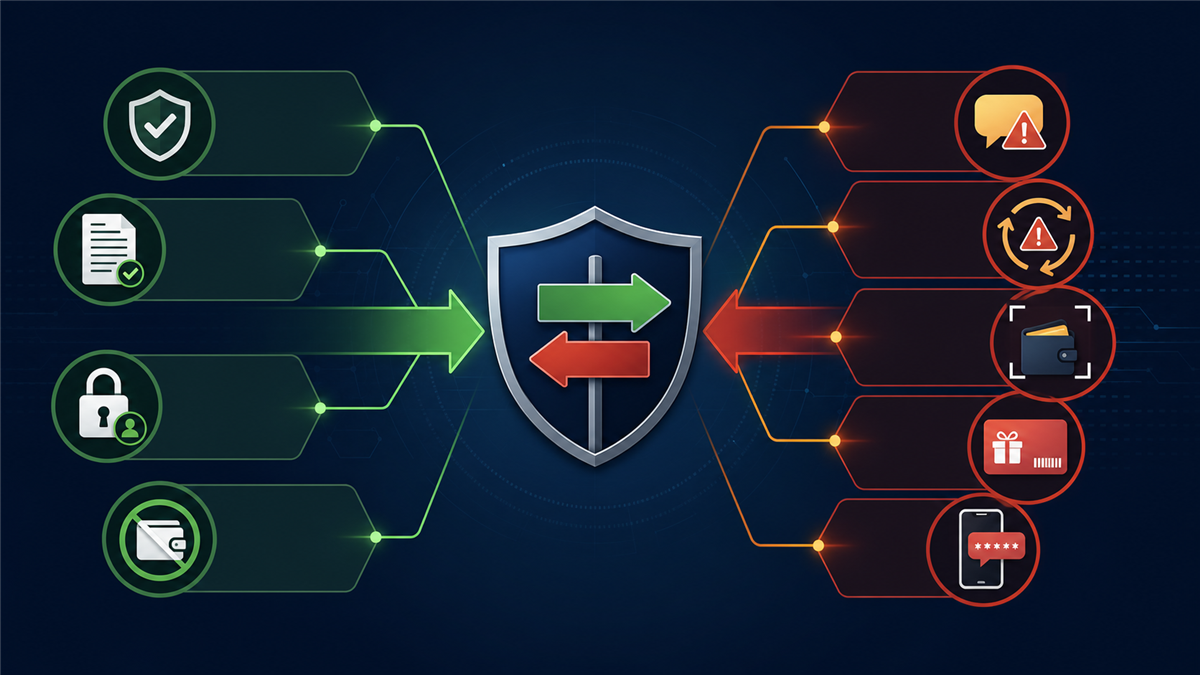
| Area | Proceed only when | Stop when |
|---|---|---|
| Identity | The operator and support path are consistent | Only a recruiter handle or copied page name exists |
| Terms | Tasks, fees, privacy, and withdrawal conditions are disclosed first | Rules appear or change after work begins |
| Permissions | Every requested permission has a clear purpose | Contact, account, or device access is unrelated to the task |
| Payment | No up-front transfer is required to receive compensation | A recharge, unlock, tax, gift card, or activation fee appears |
| Credentials | Codes and wallet data remain in the official provider flow | A person requests an OTP, PIN, password, or identity file in chat |
| Evidence | Transaction proof is complete and tied to written terms | The claim depends on a cropped screenshot or balance display |
A single stop signal is enough to pause. You do not need to resolve every question while a promoter is waiting for an answer.
Run a Minimal-Exposure Test Only After the Evidence Clears
A small test is not a substitute for due diligence. It comes after the operator, terms, permissions, and payment conditions are understandable. The test should not require your main email, contact list, wallet PIN, one-time code, or an identity document sent through chat.
Use a unique password and decline unrelated browser notifications or extensions. Record the rules before you begin. If the domain, contact account, fee, or withdrawal threshold changes, stop and preserve the original and new instructions.
RiskBites’ guide to evaluating bot-driven engagement risk offers a parallel lesson: visible activity is not the same as trustworthy, durable value.
Frequently Asked Questions
Does a working Messenger registration link prove the offer is legitimate?
No. It proves only that the destination resolved. Operator identity, terms, task availability, and payment performance require separate evidence.
Should I pay an activation or recharge fee to withdraw earnings?
Do not pay for the promise of being paid. Stop and verify the operator and written basis independently before any transfer.
Can a recruiter ask for my GCash OTP or MPIN?
No. Keep one-time codes and wallet PINs inside the official provider flow and never send them through chat or a third-party form.
Is a GCash screenshot reliable payout proof?
It is a lead to investigate, not proof by itself. Look for a complete, attributable record connected to the operator and published terms.
What should I save if the offer changes?
Preserve full URLs, account names, original and revised terms, messages, payment requests, dates, amounts, and transaction references.

0 Comments