
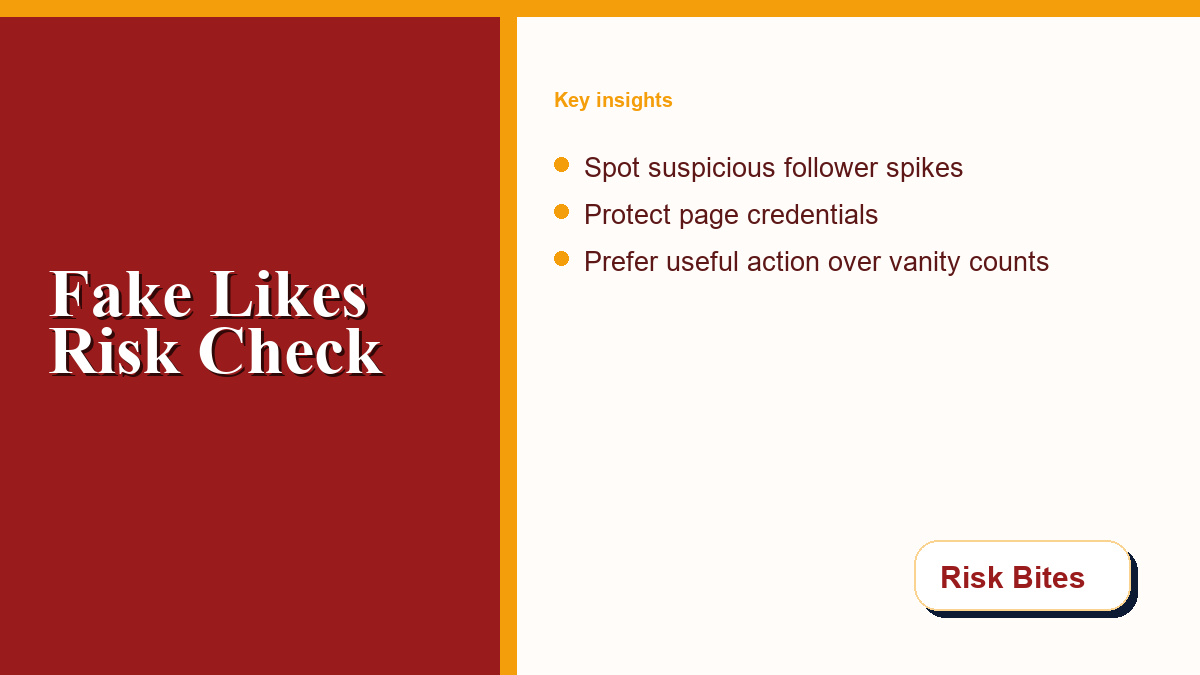
For creators and community managers trying to build an online presence, the temptation to jumpstart growth is understandable, but using a facebook bot liker to inflate numbers is a risk decision with lasting consequences. Engagement numbers can feel like a direct measure of success. Buying likes or generating artificial interactions creates a fragile foundation. This analysis evaluates fake engagement from a risk-literacy perspective, looking at how automated metrics distort real reach, trigger platform scrutiny, and erode user trust. At Risk Bites’ risk-literacy mission, we help decision-makers analyze trade-offs logically, focusing on real-world outcomes rather than vanity metrics.
Why Fake Engagement Is a Risk Signal
To evaluate the impact of artificial interaction, start with how social media networks decide which posts deserve distribution. Platforms monitor how users interact with content, often looking at the relationship between reach and active participation. If a page suddenly acquires hundreds of likes but receives no shares, comments, replies, or useful clicks, that mismatch can look like low-quality activity rather than genuine momentum.
From a risk standpoint, this means the cosmetic gain of a larger follower number can reduce your ability to reach real people. Automated interaction acts as a weak signal to content recommendation systems. When bots make up a meaningful part of your audience, your content is displayed to profiles that will not read, respond, buy, volunteer, register, or share. That skews your page metrics and makes analytics less useful for future planning. It can also make legitimate experiments harder to judge because you no longer know whether poor results came from weak content, poor timing, or an audience polluted by fake accounts.
Quick Checks Before Trusting a Likes or Followers Offer
Many third-party services promise instant growth, often packaging their offers as promotional campaigns, engagement boosts, or optimization tools. Before engaging with any service that promises a specific number of new interactions, page managers should run basic risk checks. A major indicator of automation is delivery speed. Real human behavior is irregular and spread over time. Bot systems often deliver hundreds or thousands of interactions within a short window.
Another red flag is pricing that does not make sense. If a service offers thousands of facebook bot followers for a nominal fee, the accounts behind those profiles are probably automated, recycled, low-quality, or part of a click network. Any service that asks for account credentials is a higher-risk signal. Sharing access with a growth vendor can expose you to profile loss, unauthorized ad spending, phishing, or account takeover.
What Platform and Consumer-Risk Signals Say
Platforms and consumer agencies treat artificial engagement as a threat to digital trust. Meta’s Community Standards on Inauthentic Behavior describe inauthentic assets and coordinated deception as activity that can mislead Meta or its community. That matters for page owners because fake accounts and artificial activity are not just low-quality audience growth; they can become enforcement triggers.
Facebook’s Help Center guidance on fake likes also points users toward identifying and handling spam-like behavior. Separately, the Federal Trade Commission has warned that fake social proof can mislead consumers. Its consumer alert on fake followers explains how artificial follower counts can distort trust signals, while the FTC’s alert on scams that start on social media shows why suspicious social activity deserves extra caution.
Comparing Engagement Patterns
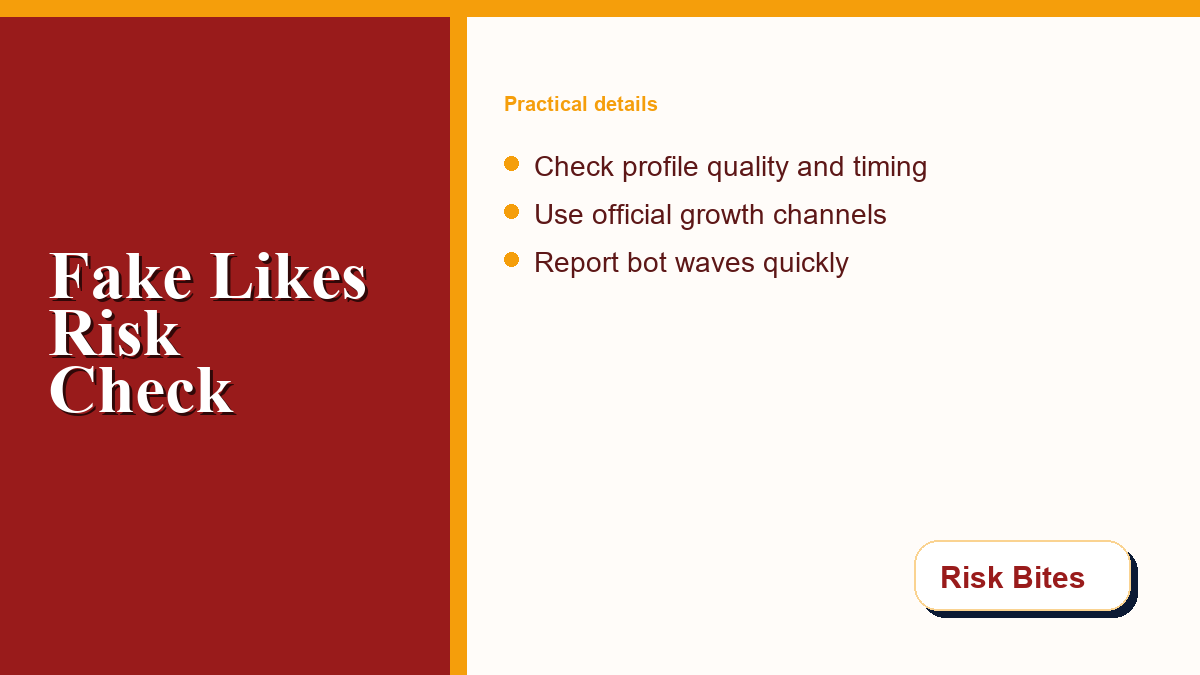
To manage digital risk, page owners need to distinguish healthy community growth from suspicious or harmful activity. The following table compares normal growth, suspicious growth, and high-risk bot activity across several practical indicators.
| Growth Pattern | Velocity and Timing | Profile Quality | Interaction Quality | Risk Level |
|---|---|---|---|---|
| Normal Organic Growth | Gradual, with peaks after useful posts, events, ads, or shares. | Complete profiles, active timelines, and audience relevance. | Comments, saves, clicks, replies, shares, and repeat visits. | Low risk and useful for planning. |
| Suspicious Growth | Sudden spikes unrelated to content quality or promotion. | Incomplete bios, stock photos, thin history, or mismatched locations. | Generic comments, repeated emojis, and little follow-up action. | Moderate risk; investigate before spending more. |
| High-Risk Bot Activity | Large bursts within minutes or hours. | Alphanumeric usernames, empty profiles, or compromised-looking accounts. | No meaningful clicks, replies, inquiries, or conversions. | Severe risk; remove, block, report, and secure the page. |
This comparison shows why artificial engagement should not be treated as harmless decoration. The primary danger is not only that fake followers fail to buy or participate. It is that they distort the signals you rely on when making marketing, safety, and community decisions.
Safer Alternatives for Pages That Need Momentum
If your goal is to build momentum and expand your audience, there are lower-risk strategies that align with platform guidelines. Rather than trying to bypass trust signals with automation, focus on content that addresses your audience’s specific needs. For more practical guides on digital strategy and risk analysis, browse the Risk Bites blog and apply the same evidence-first thinking to social growth.
Use this checklist before planning any growth campaign:
- Verify traffic sources: Avoid tools that do not explain how they reach potential followers.
- Use official advertising tools: Native platform ad systems let you target real audience segments with cleaner attribution.
- Monitor page analytics: Review locations, timing, and profile quality when new followers arrive.
- Protect credentials: Do not share passwords or page administration rights with growth vendors.
- Measure useful action: Prioritize email sign-ups, website clicks, inquiries, and real comments over follower counts.
When to Report, Block, or Walk Away
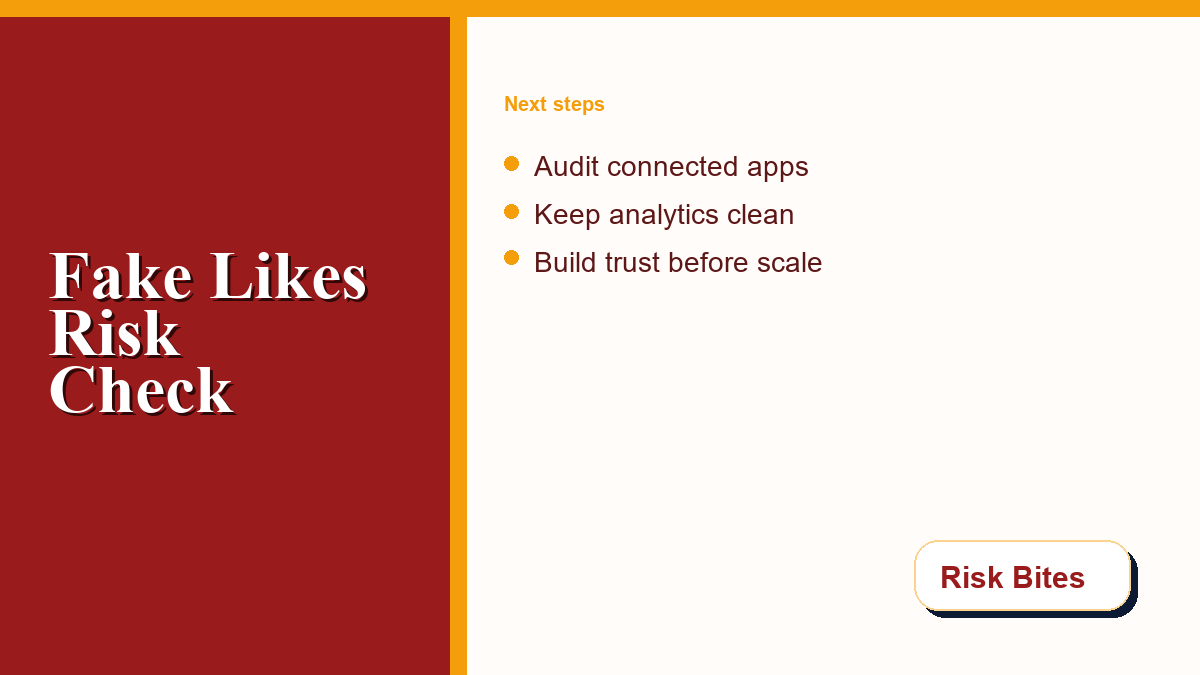
When a page receives an unexpected influx of bot followers, the manager should act quickly. Leaving large numbers of fake accounts connected to your page invites scrutiny and weakens reporting. Start by documenting the pattern. Capture examples of suspicious usernames, comment timing, profile quality, and repeated messages. Then block or remove obvious bot profiles where the platform allows it, report spam activity through official channels, and review your page roles, connected apps, and password security.
Digital assets are only as valuable as the trust they command. A page with a modest but active following will usually outperform a page inflated with automated likes. Strong social growth comes from repeated usefulness: clear posts, real conversations, verified offers, consistent moderation, and campaigns targeted to people who actually care. By making risk-literate decisions, you protect your reach, preserve cleaner analytics, and keep your community safer.
Frequently Asked Questions
Can buying fake likes get my page restricted?
Yes, it can. Platform enforcement varies by case, but fake engagement may be removed, distribution may be limited, and repeated inauthentic behavior can create account-level consequences.
How can I spot bot followers?
Look for empty profiles, repeated usernames, irrelevant locations, generic comments, sudden timing spikes, and followers who rarely click, comment meaningfully, or interact again.
Do fake followers hurt organic reach?
They can. If a large share of your audience ignores your posts, your engagement rate weakens, which can reduce how often your content reaches real followers.
Is buying social media followers illegal?
The legal risk depends on context, claims, and use. For businesses, fake social proof can become deceptive when it misleads customers, advertisers, partners, or donors.
What should I do if bots target my page?
Document the pattern, block obvious fake accounts, report spam through platform tools, review connected apps, strengthen passwords, and avoid interacting with suspicious links or messages.


0 Comments